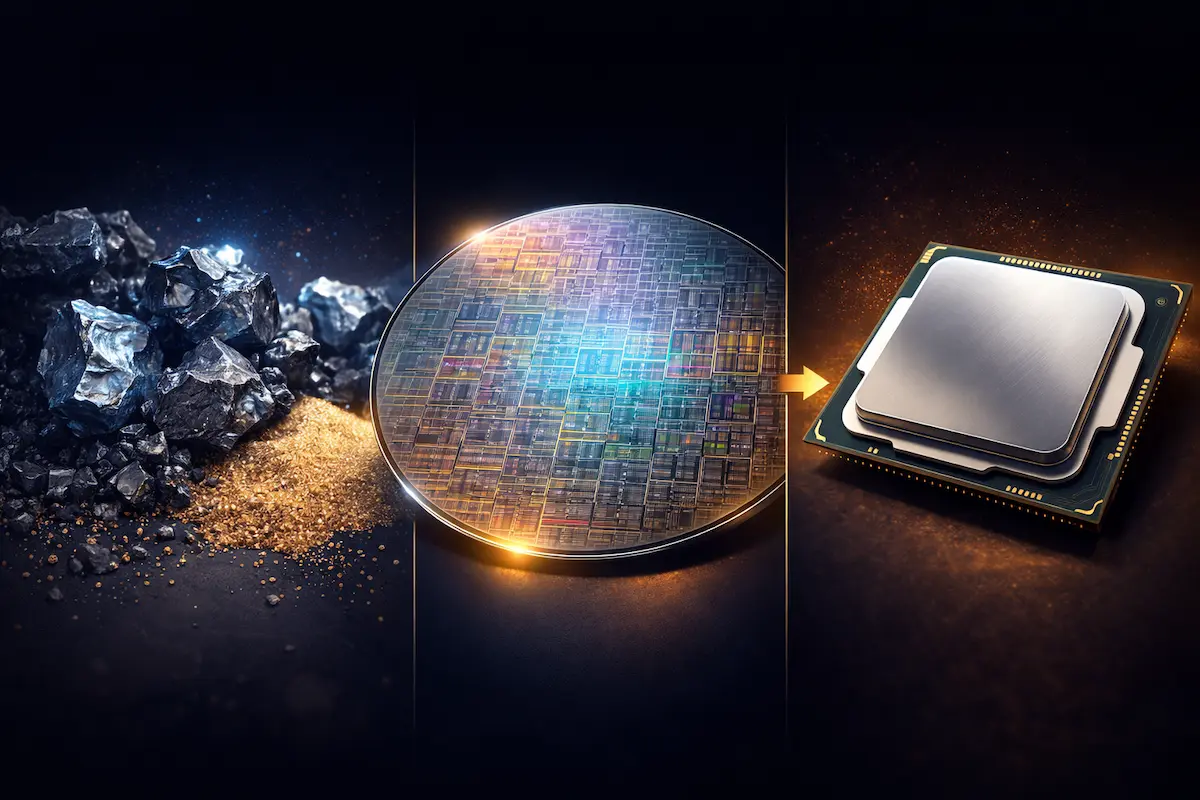
Semiconductor chips, also known as integrated circuits or microchips, are fundamental components of modern electronic devices. These chips are crafted from semiconductor materials, primarily silicon, which possess unique electrical properties. Unlike conductors, which allow electric currents to flow freely, or insulators, which resist the flow of electricity, semiconductors can conduct electricity under specific conditions. This property allows them to act as both conductors and insulators, making them incredibly versatile and instrumental in electronic applications.
The significance of semiconductor chips in the realm of electronics cannot be overstated. They are the building blocks of various electronic components, including transistors, diodes, and capacitors. When combined in large numbers, these components form complex circuits that facilitate a range of functionalities, from basic arithmetic operations to advanced communications and processing tasks. The ability of semiconductor chips to manipulate and control electric current is particularly vital in applications such as computing, telecommunications, and consumer electronics.
In addition to their conductive properties, semiconductor chips exhibit behavior that can be modified through doping, a process that strategically introduces impurities to change the material’s electrical characteristics. This allows engineers to design chips that are optimized for specific functions, enhancing performance and efficiency. Furthermore, the miniaturization of these chips has revolutionized the industry, making it possible to pack billions of transistors onto a single chip, leading to devices that are smaller, faster, and more powerful.
The Role of Semiconductor Materials
Semiconductor chips are foundational to modern electronics, and the materials used in their production are critical to their functionality. The most commonly used semiconductor material is silicon, which accounts for approximately 90% of the semiconductor market. Silicon has a band gap energy of 1.1 eV, making it an ideal material for various electronic applications. Its abundant availability, established manufacturing processes, and relatively low cost contribute significantly to its dominance in the industry.
Germanium is another important semiconductor material. With a band gap energy of approximately 0.66 eV, germanium was one of the first materials employed in semiconductor devices. While its use has declined compared to silicon, germanium is still relevant, especially in high-speed electronics and optical applications due to its superior electron mobility.
Gallium arsenide (GaAs) is a semiconductor material that has gained popularity, especially in specialized applications such as light-emitting diodes (LEDs) and microwave frequency integrated circuits. GaAs has a direct band gap of around 1.42 eV, allowing it to efficiently emit light when electric current passes through. This property makes it particularly valuable for optoelectronic devices. Moreover, GaAs has a higher electron mobility than silicon, which enhances the performance of high-frequency applications.
The selection of semiconductor materials is not arbitrary; it is based on the specific requirements of the application. For instance, the properties of silicon make it an excellent choice for general-purpose digital circuits, while materials such as gallium arsenide are preferred for specialized devices that require higher efficiency. Understanding the role of these semiconductor materials is crucial for anyone interested in the development and optimization of modern electronic devices.
How Semiconductor Chips Function
Semiconductor chips serve as fundamental components in modern electronics, functioning through intricate electrical properties based on their molecular structure. At the core of their operation is the concept of doping, where impurities are intentionally introduced into a pure semiconductor material—most commonly silicon. This process alters the electrical characteristics of the semiconductor, creating regions that are either rich in electrons, known as n-type, or deficient in electrons, referred to as p-type. The careful balance of these regions allows for enhanced control over electrical current.
One of the pivotal elements in the functionality of semiconductor chips is the p-n junction. A p-n junction is established where a p-type semiconductor meets an n-type semiconductor, leading to a unique interface that possesses distinctive electrical properties. This junction plays a critical role in enabling the movement of charge carriers, allowing for the modulation of current flow. When a voltage is applied across the junction, it can either allow current to pass through (forward bias) or impede it (reverse bias), thus acting as a switch or a diode depending on the configuration. This manipulation of electrical signals is essential for the operational efficiency of modern electronic devices.
Furthermore, semiconductor chips are responsible for various essential tasks, such as signal amplification, transmission, and processing. By integrating multiple p-n junctions within a single chip, manufacturers can create complex circuits that perform advanced functions. Each chip can execute calculations, store data, and control devices, making semiconductor technology foundational in fields ranging from consumer electronics to industrial systems. Thus, understanding how semiconductor chips function not only illuminates their crucial role in technology but also highlights their importance in shaping the future of electronics.
Applications of Semiconductor Chips
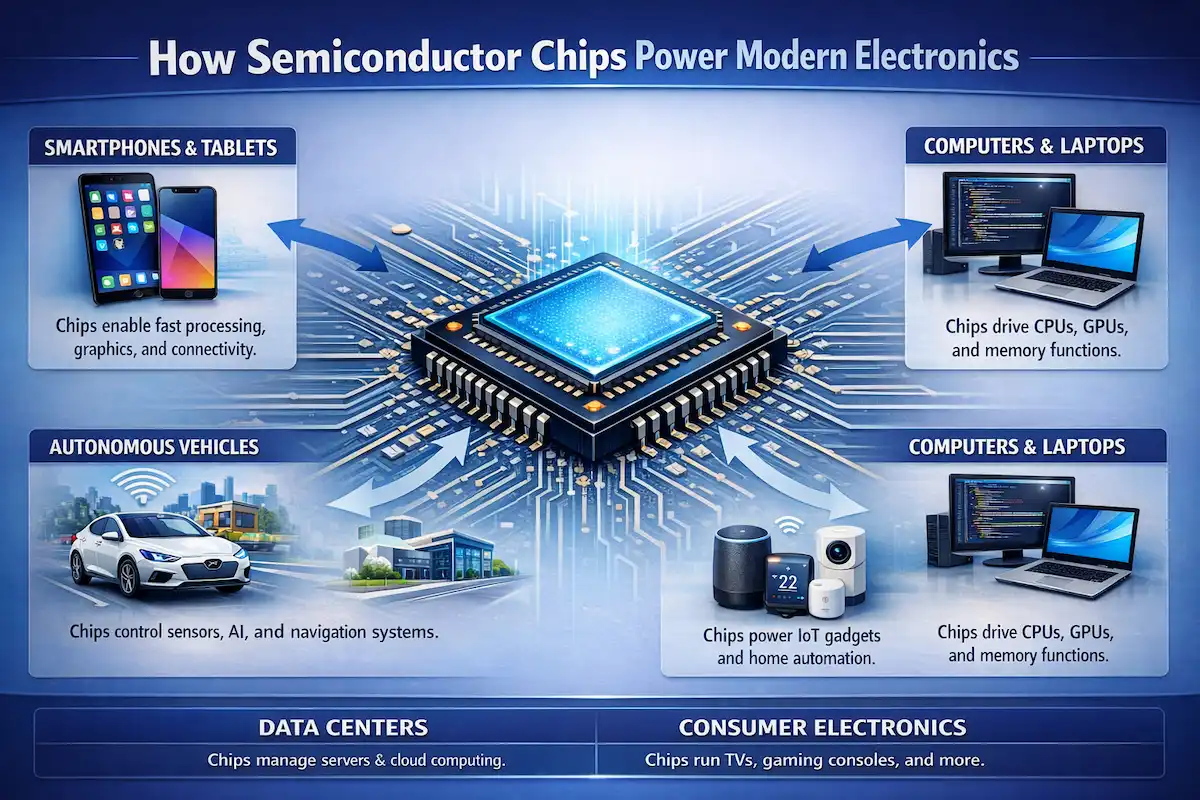
Semiconductor chips are fundamental components in a wide range of electronic devices, reflecting their versatility in modern technology. Their applications span various industries, including consumer electronics, automotive, telecommunications, and healthcare, underscoring their integral role in facilitating everyday functions.
In consumer electronics, semiconductor chips are the backbone of devices such as smartphones, tablets, and laptops. These chips enable the processing power required for user interfaces, applications, and connectivity, allowing users to perform tasks efficiently. For instance, microprocessors in smartphones manage everything from camera functions to internet connectivity, enhancing user experience.
Furthermore, the automotive industry increasingly relies on semiconductor chips to power features such as advanced driver-assistance systems (ADAS), engine control units, and infotainment systems. These chips improve vehicle safety and performance by processing real-time data, which is crucial for applications like automatic braking and adaptive cruise control.
In the telecommunications sector, semiconductor chips facilitate high-speed data transmission and processing. They are essential in routers and mobile towers, amplifying signals and supporting the infrastructure necessary for internet connectivity. As the demand for faster and more reliable communication continues to grow, the role of these chips in enabling efficient data exchange and improving network reliability is paramount.
Moreover, semiconductor chips are revolutionizing the healthcare industry through their applications in medical devices. From diagnostic equipment like MRI machines and pacemakers to wearable health monitors, these chips enhance the capability and efficiency of medical technologies, leading to improved patient outcomes.
Overall, the applications of semiconductor chips are extensive and varied, highlighting their necessity in powering the technology that underpins both modern conveniences and critical systems alike.
Advancements in Semiconductor Technology
The semiconductor industry has witnessed remarkable advancements in recent years, greatly enhancing the performance and efficiency of modern electronics. One of the most notable trends is miniaturization. The ability to fabricate smaller components allows for greater functionality within minimal physical space. For instance, the transition from 14nm to 7nm process technology has brought about significant improvements in speed and power consumption in devices ranging from smartphones to advanced computing systems.
In parallel to miniaturization, increased energy efficiency has become a primary objective in semiconductor design. Innovations such as FinFET (Fin Field-Effect Transistor) technology have enabled chips to operate effectively at lower voltages while exhibiting reduced leakage current. These developments lead not only to longer battery life in portable devices but also to less heat generation, which is crucial for maintaining optimal performance in high-density applications.
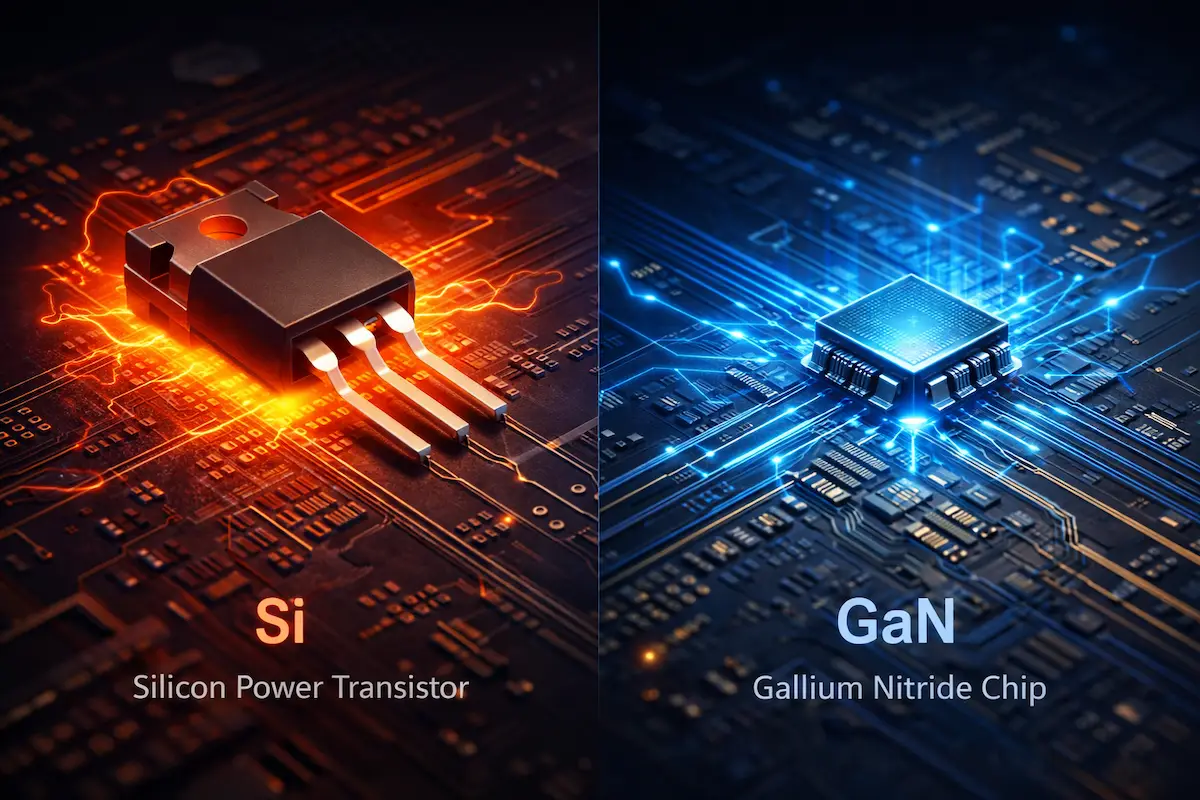
Moreover, the introduction of novel materials plays a pivotal role in revolutionizing semiconductor technology. Materials like graphene and transition metal dichalcogenides (2D semiconductors) offer superior electrical properties compared to traditional silicon. These materials exhibit increased electron mobility and the potential for flexible electronic applications, providing avenues for innovation in various sectors including wearables and Internet of Things (IoT) devices.
The implications of these advancements are profound for the electronics industry. As semiconductor technology continues to evolve, the capabilities of electronic products will expand, enabling faster processing speeds, improved connectivity, and a broader range of applications. This growth signifies not only opportunities for manufacturers but also sets the stage for addressing global challenges such as energy consumption and electronic waste management. The continued research and development in semiconductors will undoubtedly pave the way for the next generation of intelligent and efficient electronics.
Challenges in the Semiconductor Industry
The semiconductor industry plays a pivotal role in powering modern electronics, but it faces several significant challenges that can impact its growth and sustainability. One of the most pressing issues is the disruption of supply chains. Global events, such as the COVID-19 pandemic, have highlighted the fragility of supply chains, causing delays in the production and delivery of semiconductor chips. Manufacturers often struggle to source raw materials and components necessary for chip production, leading to shortages that affect various sectors reliant on these components.
Another crucial challenge is the rising cost of production. As technology evolves, so too do the methods and materials needed to fabricate advanced semiconductor devices. The introduction of more intricate processes, alongside the need for more sophisticated production facilities, has escalated capital expenditure. Additionally, fluctuations in the prices of essential materials, such as silicon, also contribute to increasing overall production costs, which can deter investment and innovation in the industry.
Competition from international markets further complicates the landscape for semiconductor manufacturers. Countries such as China are heavily investing in their semiconductor industries, aiming to become self-sufficient and reduce their reliance on foreign suppliers. This intensifying competition can make it challenging for established companies to maintain their market positions and profit margins.
Lastly, environmental concerns have become paramount in the semiconductor sector. The manufacturing process of semiconductor chips involves significant energy consumption and generates substantial electronic waste. As global awareness of environmental issues rises, there is increasing pressure on manufacturers to adopt sustainable practices. Balancing the need for innovation and efficiency with environmental responsibility is a critical challenge facing the semiconductor industry today.
Future of Semiconductor Chips in Technology
The role of semiconductor chips is poised for transformative advancement as we look to the future of technology. With the advent of Artificial Intelligence (AI), the Internet of Things (IoT), and 5G networks, the demand for more powerful and versatile chips will only increase. Semiconductor chips are at the heart of these technologies, driving innovations that promise to enhance connectivity, efficiency, and intelligent data processing.
One of the most promising developments lies in the miniaturization of semiconductor chips, which will enable the integration of more complex functions into smaller devices. This miniaturization is essential for wearable technology, where compact and energy-efficient chips can sustain longer battery life while providing extensive functionalities. As AI continues to evolve, semiconductor chips that can handle machine learning algorithms and deep learning processes will become crucial in powering advanced applications in various sectors, including healthcare, finance, and autonomous vehicles.
The IoT landscape is also set to grow exponentially, creating a need for semiconductor chips that can efficiently manage vast numbers of connected devices. These chips must not only provide robust performance but also ensure security and connectivity in an increasingly interconnected world. Innovations such as edge computing are changing the landscape, pushing the need for powerful chips that can process data directly on devices rather than relying solely on cloud servers.
Furthermore, the rollout of 5G technology will demand semiconductor chips capable of supporting ultra-fast communication and processing speed, enabling seamless interaction between devices and infrastructure. This advancement will open new possibilities for smart cities, advanced robotics, and much more.
In conclusion, the future of semiconductor chips in technology appears bright, with significant advancements anticipated in applications and capabilities. As technologies like AI, IoT, and 5G continue to develop, the semiconductor industry will evolve, emphasizing the importance of these critical components in our increasingly digital world.
The Economic Impact of Semiconductor Chips
The semiconductor industry plays a pivotal role in shaping the global economy, exerting a profound influence on various sectors. As a cornerstone of modern electronics, semiconductor chips contribute significantly to global GDP, a testament to their essential function in driving technological advancements. The multibillion-dollar industry not only generates substantial revenue through the production and sale of chips but also supports a wide range of applications, from consumer electronics to automotive, aerospace, and telecommunications.
Moreover, the semiconductor sector is a major source of job creation worldwide. With thousands of employees engaged in research and development, manufacturing, and logistics, the industry fosters economic growth by providing high-skilled employment opportunities. These jobs often have a multiplier effect, as the growth of the semiconductor industry stimulates adjacent sectors such as electronics manufacturing, materials supply, and services, further enhancing overall employment rates.
The importance of semiconductor supply chains in national economies cannot be overstated. As global demand for chips increases, nations are recognizing the need to secure their semiconductor supply chains. Countries reliant on imports are investing in domestic production capabilities to ensure a stable supply. This has led to strategic partnerships and strengthened international trade relations. Furthermore, the geopolitical significance of semiconductor manufacturing has come into focus, as nations seek to establish self-sufficiency in this critical area. Such initiatives not only aim to bolster economies but also serve to safeguard national security interests by reducing reliance on foreign sources.
In conclusion, the economic impact of semiconductor chips is extensive, influencing GDP growth, fostering job creation, and shaping the dynamics of global supply chains. As technology continues to evolve, the semiconductor industry is poised to remain a key driver of economic prosperity and innovation in the years to come.
Conclusion: The Lifeblood of Modern Electronics
In the landscape of contemporary technology, semiconductor chips emerge as the essential components that drive the functionality of modern electronics. These remarkable devices serve as the backbone for an array of electronic products, ranging from simple household appliances to complex computing systems. Their ability to control electric currents makes them indispensable in facilitating the performance and efficiency of electronic devices.
Furthermore, semiconductor technology is continually evolving, enabling innovations that transform industries and improve daily life. As the demand for faster and more efficient electronics grows, semiconductor chips are at the forefront, adapting to meet these challenges. Innovations such as smaller sizes, increased processing power, and improved energy efficiency underscore the ongoing significance of these chips in shaping the future of electronics.
The role of semiconductor chips is not limited to just consumer electronics; they are critical in sectors such as healthcare, automotive, telecommunications, and renewable energy. Each advancement in semiconductor technology leads to enhanced capabilities in electronic devices, which in turn fosters economic growth and societal development. As such, the importance of semiconductor chips cannot be overstated; they are, indeed, the lifeblood of modern technology.
In summary, semiconductor chips are integral to the current and future landscape of electronics. Their persistent advancement is vital for fostering innovation and responding to the ever-changing needs of consumers and industries alike. As we progress into an increasingly digitized world, the reliance on semiconductor technology is expected to deepen, ensuring that these chips remain a cornerstone of electronic development for years to come.