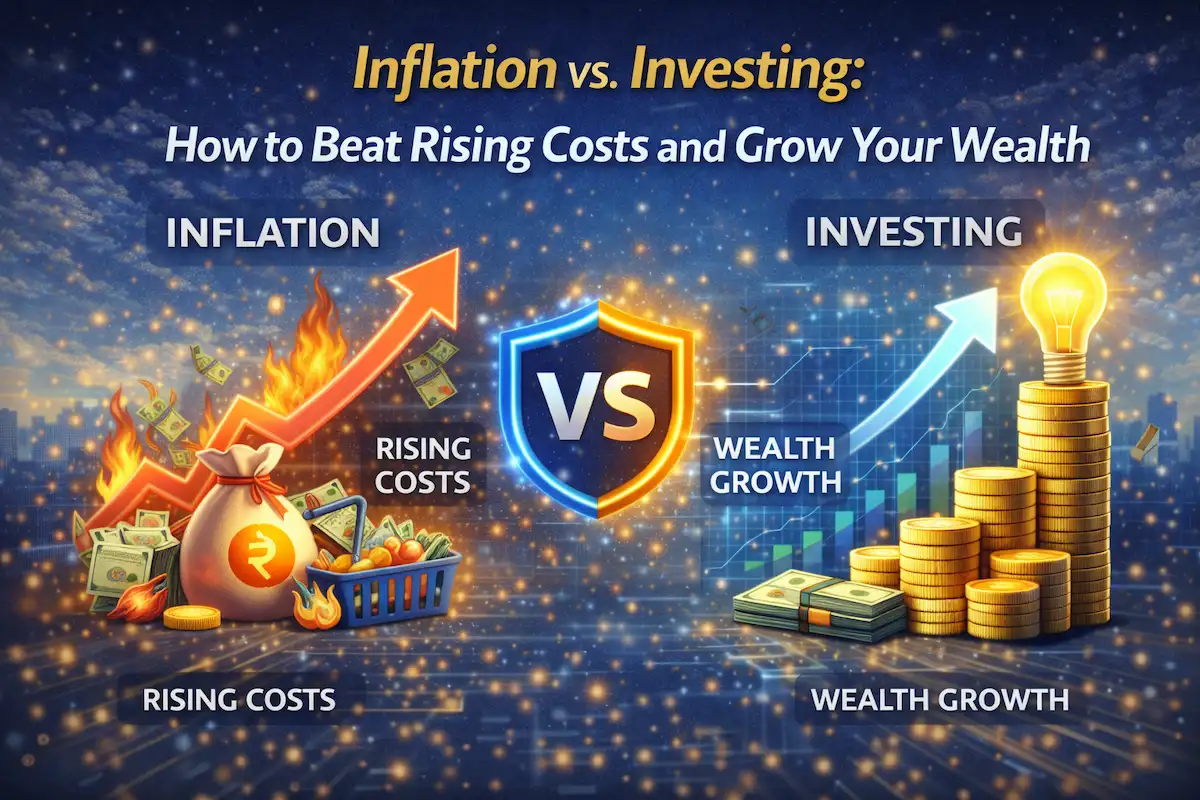
In the world of finance, there is a silent killer that slowly destroys the value of your hard-earned money. It is called Inflation. You might feel safe keeping your money in a savings account or under your mattress, but in reality, your “purchasing power” is shrinking every single year. If the price of goods rises faster than the interest you earn, you are effectively losing money.
Understanding the “Invisible Thief”: What is Inflation?
Inflation is the rate at which the general level of prices for goods and services is rising. For example, if a liter of milk cost $1 last year and it costs $1.10 today, that is 10% inflation. While a little inflation is healthy for an economy, high inflation can be disastrous for individuals who only save instead of investing.
To truly build wealth, your goal should not just be “saving” money, but “growing” it at a rate that is significantly higher than the inflation rate. If inflation is 6% and your bank gives you 3% interest, you are losing 3% of your wealth’s value annually.
Why Traditional Savings Are No Longer Enough
Decades ago, putting money in a Fixed Deposit (FD) was enough to secure a comfortable retirement. However, in 2026, global economic shifts and rising costs in healthcare and education have made traditional savings accounts obsolete. The real interest rate (Nominal Interest – Inflation) is often near zero or even negative.
The Impact of Inflation Over 20 Years
Consider this: If you have $10,000 today, and the average inflation rate is 5%, in 20 years, that same $10,000 will only buy you what $3,700 buys today. This is why you need “Inflation-Beating Assets.”
Are your investments growing fast enough to beat inflation?
📊 Calculate Your Inflation-Adjusted ReturnsTop 4 Strategies to Beat Inflation
1. Invest in Equity and Mutual Funds
Historically, the stock market is one of the few asset classes that has consistently outpaced inflation over the long term. By investing in diversified mutual funds or a Systematic Investment Plan (SIP), you own pieces of companies that can raise their prices as inflation grows, thereby protecting your profit margins.
2. Real Estate and Tangible Assets
Real estate often acts as a natural hedge against inflation. As prices rise, so do property values and rental incomes. While it requires a larger initial capital, it is a proven way to lock in value that grows alongside the economy.
3. Gold: The Traditional Hedge
Gold has been a store of value for thousands of years. During times of high inflation or currency devaluation, gold prices usually spike. Keeping 5-10% of your portfolio in Gold (or Digital Gold/SGBs) provides a safety net when other assets are struggling.
4. Invest in Yourself (Education and Skills)
The best way to beat inflation is to increase your earning capacity. By learning high-demand skills in AI, digital marketing, or finance, you ensure that your income grows faster than the cost of living.
The Role of Compounding in Beating Inflation
Compounding is your biggest ally. When you reinvest your returns, you aren’t just earning on your principal; you are earning on your inflation-adjusted gains. Starting early gives your money the time it needs to compound into a massive corpus that can easily withstand rising prices in the future.
Conclusion: Take Action Today
Beating inflation is not a one-time task; it is a lifelong strategy. You must move from being a “saver” to becoming an “investor.” Use tools like the MasterWebTool SIP Calculator to plan your journey and ensure that your future self is financially secure against the rising costs of the world.
Frequently Asked Questions (FAQs)
1. Is it possible to have zero inflation?
Technically yes, but most economists believe that a small amount of inflation (around 2-3%) is necessary to encourage spending and economic growth.
2. Which asset is best for short-term inflation protection?
For short-term (less than 2 years), Liquid Funds or Short-Term Debt Funds are better than savings accounts, though they may not fully beat high inflation like Equity does over the long term.
3. How often should I review my portfolio for inflation?
It is wise to review your investment strategy at least once a year to ensure your asset allocation is still on track to beat current inflation trends.