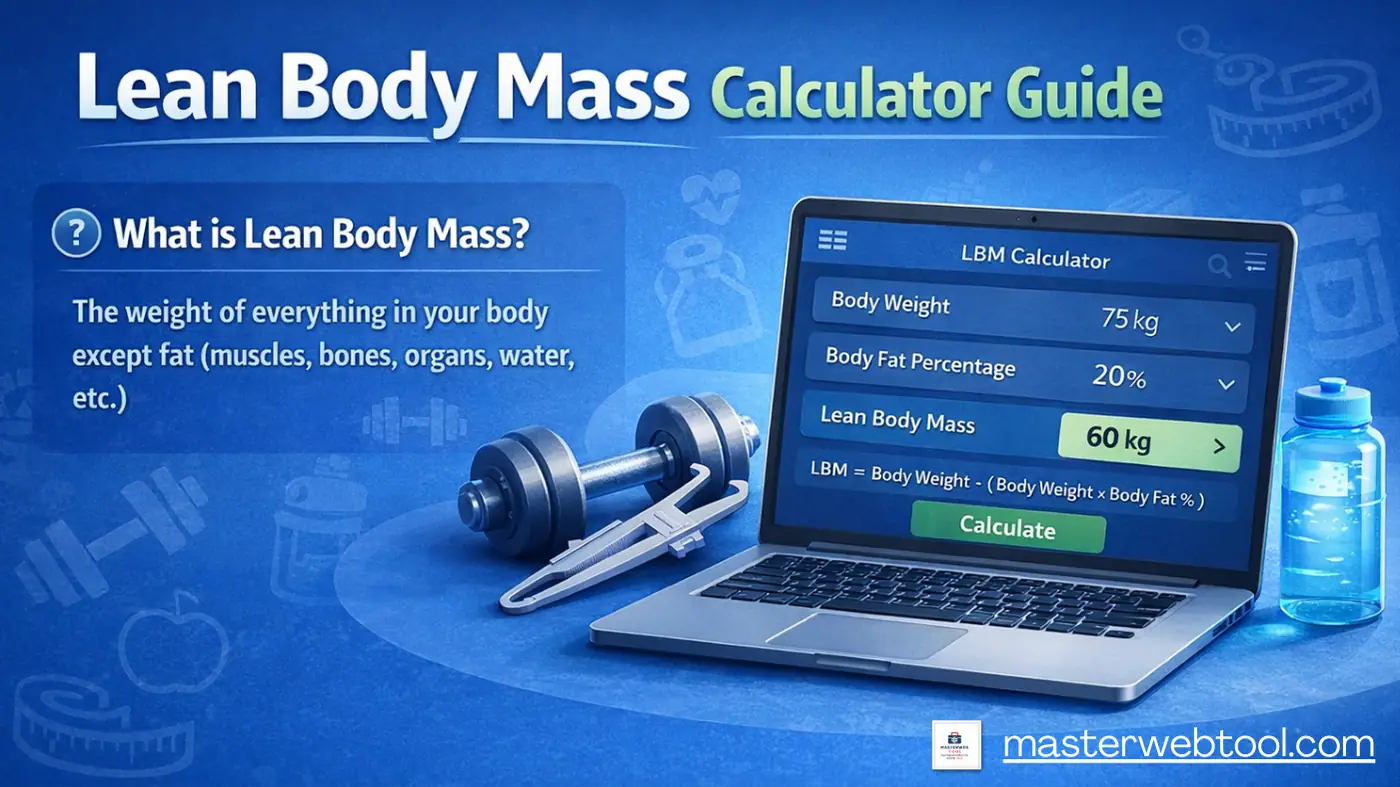
Lean Body Mass Calculator Guide helps you understand how to calculate lean body mass correctly and how to interpret the results step by step. Lean Body Mass (LBM) represents the weight of your body excluding fat and provides a clearer picture of real fitness and health.
This complete Lean Body Mass Calculator guide explains what lean body mass is, why it matters, how a lean body mass calculator works, common mistakes people make, and when LBM should or should not be relied upon. If you are serious about fitness, muscle growth, or long-term health, this guide will help you make better decisions.
What Is Lean Body Mass?
Lean Body Mass (LBM) refers to the total weight of your body excluding fat mass. It includes muscles, bones, organs, connective tissues, and body water. In simple terms, lean body mass represents everything in your body that is not fat.
Two people can have the same body weight but very different lean body mass values. This difference significantly affects strength, metabolism, endurance, and overall physical performance.
Why Lean Body Mass Calculator Is Used
- To understand real body composition
- To track muscle growth accurately
- To support fat-loss without muscle loss
- To improve fitness and nutrition planning
- To monitor long-term metabolic health
Lean Body Mass Formula Explained
Lean body mass is estimated using scientific formulas based on height, weight, and gender. Different formulas exist, but all aim to calculate the non-fat portion of body weight.
Unlike BMI, lean body mass calculations focus on muscle and essential tissues rather than total weight alone.
How to Use a Lean Body Mass Calculator (Step-by-Step Guide)
- Select your gender
- Enter your height accurately
- Enter your current body weight
- Click on the calculate button
- View your lean body mass instantly
How to Read and Understand Lean Body Mass Results
A higher lean body mass usually indicates better muscle development and metabolic health. However, ideal lean body mass varies depending on height, gender, age, and lifestyle.
Instead of comparing with others, it is best to track your lean body mass over time and focus on gradual improvement.
Common Mistakes When Using a Lean Body Mass Calculator
- Using incorrect height or weight values
- Assuming lean body mass equals muscle mass only
- Ignoring hydration levels
- Comparing results without considering fitness level
Who Should Use a Lean Body Mass Calculator?
- Gym members and fitness enthusiasts
- Athletes and sports professionals
- People managing fat-loss goals
- Individuals focused on muscle building
- Anyone interested in body composition
Who Should NOT Rely Only on Lean Body Mass?
- Pregnant women
- Elderly individuals
- People with medical conditions
- Those requiring clinical body composition analysis
Lean Body Mass vs BMI vs Body Fat
- BMI: Height-to-weight ratio
- Body Fat Percentage: Amount of fat in the body
- Lean Body Mass: Weight excluding fat
For better health insights, lean body mass should be used alongside BMI and body fat percentage.
Tips to Maintain Healthy Lean Body Mass
- Follow a protein-rich balanced diet
- Perform regular strength training
- Avoid extreme calorie restriction
- Stay hydrated
- Get adequate rest and recovery
Related Health Calculators
Check Your Lean Body Mass Now
Use our free Lean Body Mass Calculator to understand your body composition and track real fitness progress.
Open Lean Body Mass Calculator →Frequently Asked Questions (FAQ)
What is a Lean Body Mass Calculator?
A Lean Body Mass Calculator estimates the weight of your body excluding fat, including muscles, bones, organs, and body water.
Is Lean Body Mass calculation accurate?
Lean body mass calculations provide a reliable estimate for fitness tracking, though results may vary slightly depending on the formula used.
Why is Lean Body Mass important?
Lean body mass reflects real fitness, muscle health, and metabolism better than body weight alone.
How often should I check my Lean Body Mass?
Checking lean body mass every few weeks or months is sufficient for most people.

Ravi Chand Yadav is the founder of MasterWebTool, focused on building fast, simple, and reliable online tools that help users manage everyday digital tasks easily.