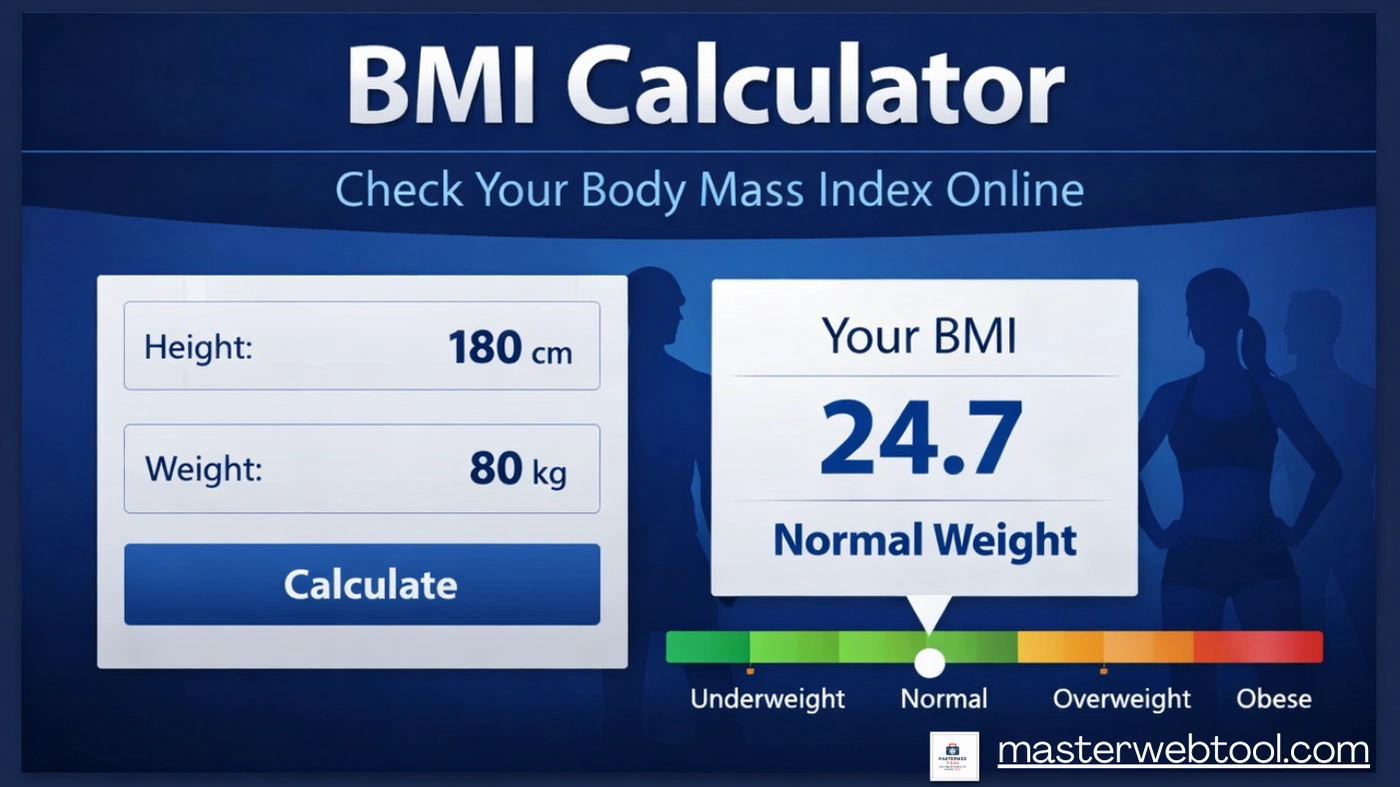
BMI Calculator
Use this free BMI Calculator to quickly check your Body Mass Index based on height and weight. Fast, accurate, and easy to use for health and fitness tracking.
This BMI Calculator Guide is designed to help you clearly understand how Body Mass Index (BMI) works, how to calculate it correctly, and how to interpret your results step by step. BMI is one of the most widely used methods to assess whether your body weight is healthy in relation to your height.
In this complete guide, you will learn what BMI means, why it matters for health, how to use a BMI calculator properly, common mistakes people make, and when BMI should or should not be relied upon. If you are focused on health, fitness, or weight management, this guide will help you make informed and smarter decisions.
What Is BMI (Body Mass Index)?
Body Mass Index (BMI) is a numerical value calculated using a person’s height and weight. It helps categorize individuals into weight groups such as underweight, normal weight, overweight, or obese.
Healthcare professionals often use BMI as a screening tool to identify potential health risks. Although BMI does not directly measure body fat, it provides a quick and practical indicator for most adults.
Why Is a BMI Calculator Used?
- To quickly assess whether body weight is healthy
- To identify potential obesity-related health risks
- To monitor weight changes over time
- To support fitness and diet planning
- To promote awareness of healthy weight management
BMI Formula Explained (With Example)
The standard BMI formula is:
- BMI = Weight (kg) ÷ Height² (m²)
Example:
If your weight is 70 kg and your height is 1.75 meters:
- 70 ÷ (1.75 × 1.75) = 22.86
A BMI value of 22.86 falls within the normal weight range.
BMI Categories and Their Meaning
- Underweight: BMI below 18.5
- Normal weight: BMI between 18.5 and 24.9
- Overweight: BMI between 25 and 29.9
- Obesity: BMI 30 or higher
How to Use a BMI Calculator (Step-by-Step)
- Open the BMI Calculator tool
- Enter your height accurately
- Enter your current body weight
- Click the calculate button
- View your BMI value and category instantly
How to Understand Your BMI Result
Your BMI result shows which weight category you fall into. A normal BMI usually suggests healthy weight, while underweight or overweight results may indicate the need for lifestyle changes.
BMI should be considered a general guideline and used alongside other health measurements for better accuracy.
Common Mistakes When Using a BMI Calculator
- Entering incorrect height or weight values
- Ignoring unit conversions
- Assuming BMI directly measures body fat
- Comparing BMI without considering age or fitness level
Who Should Use a BMI Calculator?
- Adults monitoring overall health
- People starting a fitness journey
- Individuals managing weight goals
- Students and health researchers
- Public health awareness programs
Who Should Not Rely Only on BMI?
- Athletes with high muscle mass
- Bodybuilders
- Pregnant women
- Elderly individuals
BMI vs Body Fat vs Lean Body Mass
- BMI: A general height-to-weight ratio
- Body Fat Percentage: Measures actual fat content
- Lean Body Mass: Body weight excluding fat
For deeper health insights, BMI should be combined with body fat and lean body mass measurements.
Tips to Maintain a Healthy BMI
- Follow a balanced and nutritious diet
- Exercise regularly
- Stay physically active throughout the day
- Maintain a consistent sleep routine
- Avoid extreme or crash dieting
Related Health Calculators
Calculate Your BMI Now
Use our free BMI Calculator to instantly check your BMI and understand your body weight status.
Open BMI Calculator →Frequently Asked Questions (FAQ)
What is a BMI Calculator?
A BMI Calculator is an online tool that calculates Body Mass Index using height and weight to determine weight category.
Is BMI calculation accurate?
BMI provides a general estimate and does not directly measure body fat. It works best when used with other health indicators.
What is a healthy BMI range?
For most adults, a BMI between 18.5 and 24.9 is considered healthy.
How often should BMI be checked?
Checking BMI every few weeks or months is sufficient for most people.

Ravi Chand Yadav is the founder of MasterWebTool, dedicated to building fast, simple, and reliable online tools that help users solve everyday digital tasks efficiently.