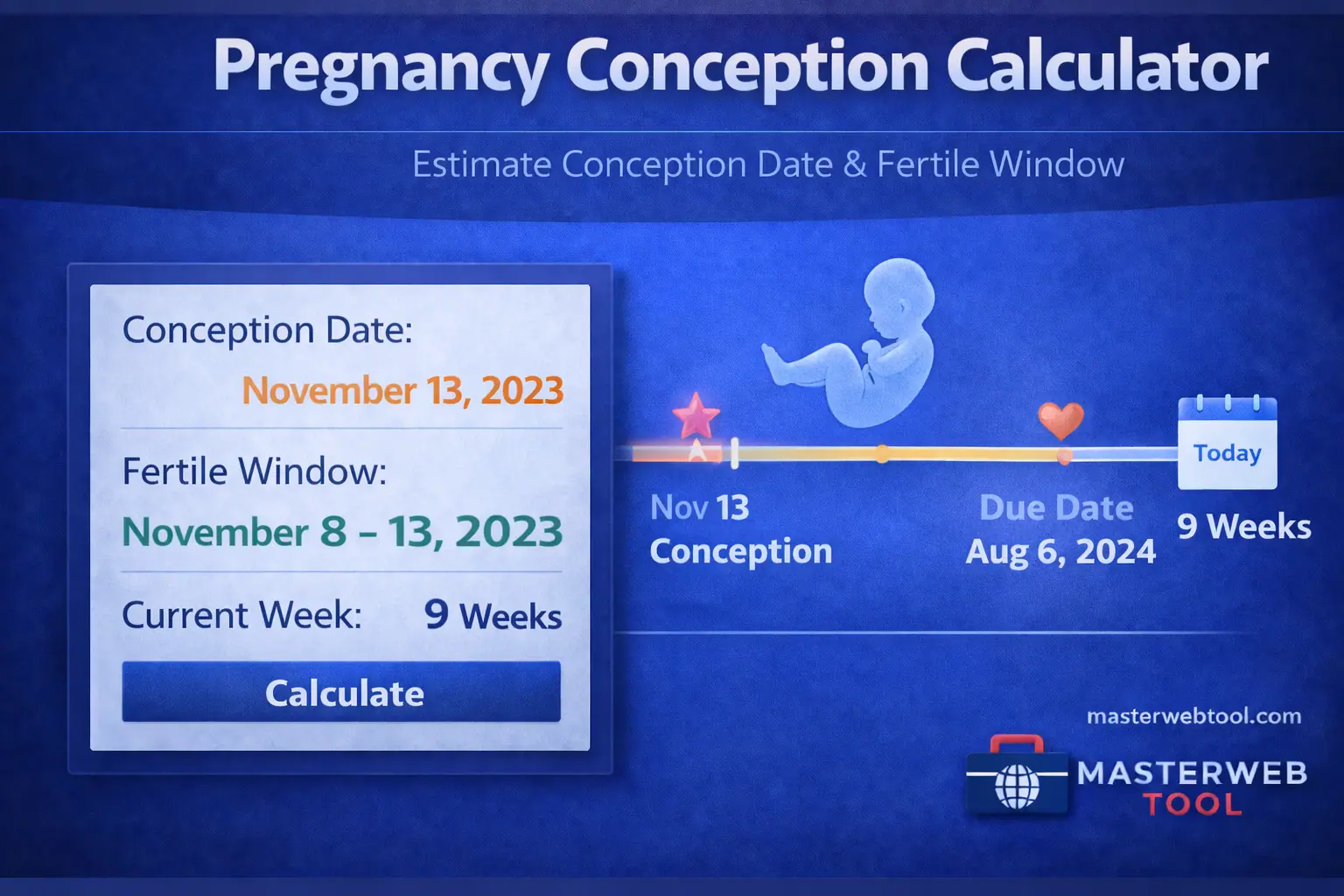
Pregnancy Conception Calculator Guide helps you estimate the most likely date of conception and understand how pregnancy begins. Knowing your conception date can help you track pregnancy weeks, fetal development, and important prenatal milestones more accurately.
This complete Pregnancy Conception Calculator guide explains what conception date means, how a conception calculator works, how accurate it is, and how you can use it alongside a pregnancy calculator for better planning and awareness.
What Is a Pregnancy Conception Calculator?
A Pregnancy Conception Calculator is an online tool that estimates the date when conception most likely occurred. It usually works by calculating backwards from the expected due date or using the first day of the last menstrual period (LMP).
This estimated conception date helps expectant parents understand when pregnancy began and how the baby has developed over time.
Why Conception Date Is Important
- Helps track accurate pregnancy timeline
- Improves understanding of fetal development stages
- Useful for prenatal checkups and scans
- Supports pregnancy planning and awareness
- Helps estimate ovulation and fertile window
How Pregnancy Conception Calculator Works
Most Pregnancy Conception Calculators estimate conception date using one of the following methods:
- Last menstrual period (LMP)
- Expected due date
- Average ovulation timing
Ovulation usually occurs around 14 days after the start of the menstrual cycle, and conception typically happens within a short fertile window around ovulation.
Conception Calculation Explained
The most common estimation method is:
- Estimated Conception Date = LMP + 14 Days
This method assumes a regular 28-day menstrual cycle. For women with irregular cycles, results may vary slightly.
How to Use a Pregnancy Conception Calculator (Step-by-Step)
- Open the Pregnancy Conception Calculator
- Enter the first day of your last menstrual period
- Or enter your expected due date
- Click the calculate button
- View your estimated conception date instantly
Understanding Your Conception Date Result
The result shows the most likely date when conception occurred. This is an estimate, not an exact day, because sperm can survive for several days inside the female reproductive system.
Doctors may use ultrasound scans to refine pregnancy dating if needed.
Conception Date vs Due Date
- Conception Date: When fertilization likely occurred
- Due Date: Expected date of delivery
Both dates are closely related, but the due date is more commonly used for medical planning.
Who Should Use a Pregnancy Conception Calculator?
- Pregnant women
- Women planning pregnancy
- Couples tracking fertility
- Expectant parents curious about conception timing
Common Mistakes When Calculating Conception
- Assuming conception happens on a single exact day
- Using incorrect LMP date
- Ignoring irregular menstrual cycles
- Relying only on calculators without medical advice
Tips for Pregnancy Planning
- Track menstrual cycles regularly
- Maintain a healthy lifestyle
- Consult a healthcare professional
- Attend regular prenatal checkups
- Follow medical recommendations carefully
Related Pregnancy & Health Calculators
Calculate Your Conception Date Now
Use our free Pregnancy Conception Calculator to estimate your conception date and better understand your pregnancy timeline.
Open Pregnancy Conception Calculator →Frequently Asked Questions (FAQ)
What is a Pregnancy Conception Calculator?
A Pregnancy Conception Calculator estimates the most likely date when conception occurred based on menstrual cycle or due date.
Is the conception date calculation accurate?
It provides an estimate. Actual conception timing may vary due to ovulation and sperm lifespan.
Can conception be calculated without LMP?
Yes, some calculators allow estimation using due date or ovulation information.
Why is conception date different from due date?
Conception date marks fertilization, while due date estimates delivery time.

Ravi Chand Yadav is the founder of MasterWebTool, dedicated to creating fast, simple, and reliable online calculators for health, pregnancy, and everyday life needs.